
ŸWelcome to Daijyo-ji.
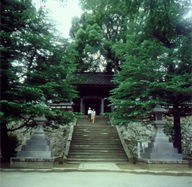
As you look up at the immense camphor trees dated as being around 1,200 years old, you clamber up stone stairs and pass through the gateway to this temple; the temple's gate amid deep greenery, the reception hall, the main hall, the Yakushi Hall, and the belfry present themselves in front of you.
The temple houses numerous paintings executed on fusuma (sliding doors) by the mid-Edo period artist Ohkyo Maruyama and other members of his school of painting. For this reason, the temple is familiarly known as Ohkyo-dera, or the temple of Ohkyo. Ohkyo's talent was first recognized, at a time when he was still an unknown artist, by Mitsuzo, the temple's venerated head priest.
Mitsuzo gave him three kan (about 11 kg) of silver. Ohkyo used the money to fund his studies in Edo (now Tokyo) and make a name for himself. After finding fame, he then returned to the temple with his sons and disciples and produced the paintings on the fusuma for the Buddhist altar room and a dozen other rooms.
Currently, 165 of those paintings have been designated important cultural properties of Japan. Aside from these paintings, the temple further houses three statues of Buddha also so designated.
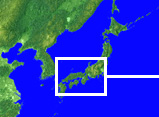
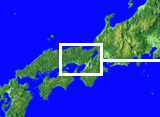
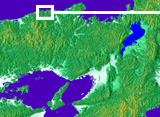
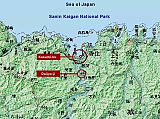
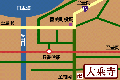
Daijo-ji is located in the town of Kasumi, situated in the Hyogo Prefecture county of Kinosaki in the San'in Kaigan National Park along the Sea of Japan coast. The temple is five minutes away from JR Kasumi Station by way of the Zentan bus bound for Muraoka.
Location
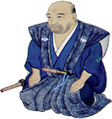
Ohkyo Maruyama
A click of a picture displays an expansion picture.
ŸCourse
|
@ |  |
@ |  |
|||||||||||||||
| @ | @ | A click of a picture displays an expansion picture. | |||||||||||||||||